
Peak Season Is Here: Why It’s Not Too Late to Slot Your Warehouse

Peak season is happening now. And if you haven’t completed your warehouse slotting project yet, it is not too late.
In fact, waiting until after peak season may mean missing an important opportunity to improve warehouse efficiency when your operation needs it most.
Warehouse slotting is the process of strategically positioning inventory within a warehouse based on demand, product characteristics, order patterns, and operational requirement. It is often treated as a project to complete before peak season.
Ideally, this strategy would already be in place.
But in the real world, warehouse operations are constantly changing. Forecasts shift. Product demand changes. New SKUs are introduced. Fast movers become even faster. Pick paths become congested. Labor becomes harder to find. And suddenly, peak season is here.
That does not mean slotting should be put on hold.
Slotting during peak season is doable, and in many operations, it can be crucial.
Why Peak Season Is the Right Time to Pay Attention to Slotting
Peak season puts your warehouse under stress.
Order volumes increase. The products being picked most frequently can change. Pick faces empty faster. Replenishment activity increases. Congestion becomes more noticeable. Travel time adds up. And small inefficiencies that may have been manageable during normal operations can become significant bottlenecks.
This makes peak season an important time to identify where your warehouse is struggling.
Consider what happens when your highest-demand products are not positioned effectively.
Pickers may travel farther than necessary. Frequently ordered products may be spread throughout the facility. Replenishment may interfere with picking. High-volume areas may become congested. And labor can be consumed by unnecessary travel instead of productive picking.
Slotting addresses these types of inefficiencies by aligning inventory locations with how your warehouse is actually operating.
And during peak season, you have real operational data showing you what is happening right now.
“But Isn’t It Too Late to Slot During Peak?”
No.
The idea that warehouse slotting has to be completed months before peak season can make it seem like there is a hard deadline.
There isn't.
A full warehouse re-slot may not be appropriate in the middle of your busiest period, but that does not mean every slotting initiative needs to wait.
There are different levels of slotting that can be performed during peak season.
1. Prioritize the biggest opportunities
You don't necessarily need to re-slot every SKU.
Start with the products creating the greatest operational impact.
Look at:
Your highest-volume SKUs
Products with the highest pick frequency
Items generating excessive travel
Products frequently involved in replenishment
SKUs creating congestion
Products that have changed significantly in demand
Items that are consistently picked together
Locations that are difficult or inefficient to access
A targeted approach can deliver meaningful improvements without requiring a warehouse-wide disruption.
2. Slot based on current demand
Peak season can expose differences between your assumptions and reality.
The products you expected to be your biggest movers may not be the products actually driving orders.
That makes current order data extremely valuable.
Instead of relying exclusively on historical averages or last year's peak, look at what customers are ordering now.
Current demand can reveal immediate slotting opportunities.
3. Make targeted changes
Slotting does not always mean moving thousands of products.
Sometimes the most valuable changes are relatively small.
Moving a high-frequency SKU closer to the appropriate pick area, adjusting a pick face, consolidating inventory, or relocating a group of frequently ordered products can reduce unnecessary travel and improve workflow.
The goal is not to move inventory simply for the sake of moving it.
The goal is to put the right products in the right locations based on the way your operation is working today.
Peak Season Can Make Slotting More Important, Not Less
One of the biggest misconceptions about peak-season slotting is that warehouse teams should avoid making any changes.
Operational stability is certainly important. A poorly planned large-scale re-slot can create disruption at the wrong time.
But there is a difference between making uncontrolled changes and using data to make targeted improvements.
Peak season magnifies inefficiencies.
If a picker walks an extra 100 feet for a product during normal volume, the impact may be relatively small.
Multiply that unnecessary travel across hundreds or thousands of picks, multiple shifts, and multiple days, and the operational impact becomes much larger.
That is why peak season can make certain slotting opportunities more valuable.
Slotting Doesn't Have to Be an “All or Nothing” Project
A common mistake is thinking about slotting as a massive warehouse transformation:
Move everything. Change everything. Complete the entire project before peak.
That approach can be difficult to execute and unnecessary.
Instead, think of slotting as an ongoing optimization process.
You can:
Identify → Prioritize → Slot → Measure → Adjust
During peak season, this may mean focusing on a smaller group of high-impact SKUs.
After peak, you can use what you learned to develop a broader slotting strategy.
This creates a continuous improvement cycle rather than treating slotting as a one-time project.
What Should You Look for During Peak Season?
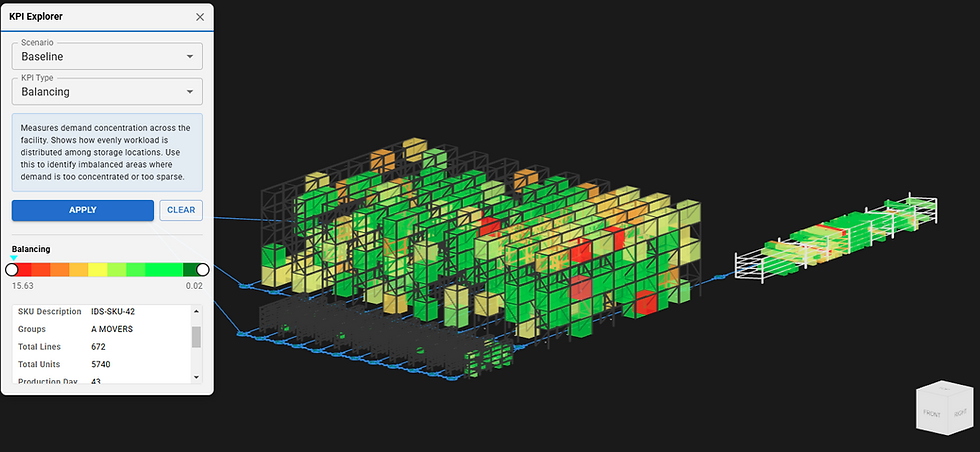
If you're evaluating whether your warehouse could benefit from slotting right now, start by looking for operational signals.
Excessive picker travel
If your team is spending significant time walking or driving between picks, product placement may be contributing to the problem.
Frequently picked products in poor locations
High-frequency SKUs should be evaluated carefully. Their location can have a disproportionate effect on total travel and productivity.
Increased replenishment activity
Peak demand can expose pick-face capacity issues. If fast-moving products require frequent replenishment, the current slot may not be appropriate for peak volume.
Congestion
If multiple workers repeatedly converge on the same areas, product placement and warehouse layout may need to be evaluated.
Changing product velocity
A product that was a slow mover six months ago may be a fast mover today.
Your slotting strategy needs to account for changing demand.
Frequently ordered-together products
Order data can reveal relationships between products. Items that are frequently purchased together may present an opportunity for more efficient placement.
The Biggest Mistake May Be Waiting Until January
Post-peak is an excellent time for a comprehensive warehouse review.
But waiting until after peak to think about slotting can mean spending the entire peak season operating with known inefficiencies.
If your warehouse is already experiencing:
Longer pick times
Increased travel
Congestion
Replenishment challenges
Labor pressure
Productivity declines
Rapidly changing SKU velocity
then waiting several more months to evaluate your slotting strategy may simply prolong the problem.
You don't have to choose between “do nothing” and “re-slot the entire warehouse.”
A targeted slotting strategy can address the highest-impact opportunities now while protecting operational continuity.
What About Disruption During Peak Season?
This is where a data-driven approach matters.
Peak-season slotting should be planned around operational realities.
That can mean:
Prioritizing a limited number of SKUs
Making changes during appropriate operational windows
Avoiding unnecessary moves
Coordinating slotting with replenishment and picking teams
Testing changes before expanding them
Measuring results after implementation
Keeping safety and accessibility requirements in mind
The objective is to improve the operation—not create another source of disruption.
October Is Not Too Late
If you're reading this in October and thinking, “We should have done our slotting before peak,” don't assume the opportunity has passed.
You can still take action.
Start with the data you already have.
Identify the products generating the most activity. Look at where your team is spending time. Find the locations creating bottlenecks. Examine replenishment patterns. Identify
changes in SKU velocity.
Then prioritize.
You don't need to solve everything at once.
The best time to optimize a warehouse is before inefficiencies become expensive.
The second-best time is when your operation is showing you exactly where those inefficiencies are.
Peak season provides that visibility.
Slotting During Peak Can Also Improve Your Post-Peak Strategy
There is another benefit to taking action now.
The data you collect during peak can help inform your next slotting cycle.
Instead of waiting until peak is over and relying on assumptions about what happened, you can document:
Which SKUs drove the most activity
Which locations experienced congestion
Where replenishment increased
Which products changed velocity
Where pickers traveled the most
Which slotting changes produced measurable improvements
That information becomes valuable input for your post-peak warehouse strategy.
Peak season can therefore be both an operational challenge and a source of valuable slotting intelligence.
The Bottom Line: It's Not Too Late
Peak season is here.
That does not mean slotting is off the table.
Warehouse slotting during peak season is doable when it is targeted, data-driven, and carefully planned.
You don't necessarily need a massive warehouse-wide re-slotting project. Start by identifying the highest-impact opportunities and focus your resources where they can make the greatest operational difference.
If your warehouse is struggling with travel time, congestion, replenishment, changing SKU velocity, or increasing pick demands, now is a good time to look at your slotting strategy.
Don't wait until peak season is over to ask what you could have improved. Use the data you're generating today to make targeted improvements today and build a smarter slotting strategy for tomorrow.
Frequently Asked Questions About Peak-Season Warehouse Slotting
Is it too late to slot a warehouse in October?
No. October is not necessarily too late for warehouse slotting. While major warehouse reconfigurations may be difficult during peak season, targeted slotting changes can still address high-impact issues such as excessive travel, congestion, replenishment problems, and high-frequency SKU placement.
Can you re-slot a warehouse during peak season?
Yes. Warehouses can make targeted slotting changes during peak season when the changes are carefully planned and based on operational data. A phased approach can reduce disruption while addressing the products and locations having the greatest operational impact.
Why is slotting important during peak season?
Slotting is especially relevant during peak season because higher order volumes can magnify inefficiencies in product placement. Poorly positioned high-volume products can increase picker travel, congestion, replenishment activity, and labor requirements.
What is warehouse slotting?
Warehouse slotting is the process of determining where products should be stored or picked within a warehouse. Effective slotting considers factors such as SKU velocity, order frequency, product dimensions, weight, replenishment requirements, storage capacity, and relationships between products.
What products should be re-slotted first?
A common starting point is high-frequency or high-volume SKUs, particularly products that generate significant picker travel, frequent replenishment, or congestion. However, the appropriate priorities depend on the warehouse's specific operational data and constraints.
Does warehouse slotting reduce picker travel?
Strategic slotting can reduce unnecessary picker travel by positioning frequently picked products in locations that better align with the warehouse's workflow. The actual impact depends on the warehouse layout, order profile, product characteristics, and implementation.
Should I wait until after peak season to slot my warehouse?
Not necessarily. A full post-peak analysis can be valuable, but waiting does not mean you have to ignore obvious slotting opportunities during peak. Targeted improvements can address immediate operational challenges while peak-season data can inform a more comprehensive post-peak strategy.
How do I know if my warehouse needs slotting?
Common indicators include excessive picker travel, increasing pick times, congestion, frequent replenishment, inefficient product locations, changing SKU velocity, and difficulty meeting increased order volumes.
Can slotting be done without moving the entire warehouse?
Yes. Slotting can be approached incrementally. A warehouse can prioritize specific SKUs, zones, or locations rather than moving every product at once.
What data is needed for warehouse slotting?
Useful slotting data can include SKU data, order lines, pick locations, product dimensions and weight, inventory levels, replenishment activity, storage capacity, and order relationships. The specific data required depends on the goals of the slotting project and methods/tools utilized.
What should I do if peak season has already started?
Start with a focused analysis. Identify your highest-volume products, areas with excessive travel or congestion, frequent replenishment issues, and SKUs whose demand has changed significantly. Then prioritize targeted changes that can be implemented without unnecessarily disrupting operations.
Is slotting a one-time project?
No. Slotting is often most effective when treated as an ongoing optimization process. SKU demand, inventory levels, product assortments, order patterns, and warehouse constraints change over time, so slotting strategies should be reviewed and adjusted as the operation changes.
When is the best time to start warehouse slotting?
The ideal timing depends on the operation, but slotting should not be viewed as something that can only happen before peak season. If your warehouse is operating today, you have data today and that data can reveal opportunities to improve performance now.


Comments